Why Polyethylene Grade Matters in Rotomolded Cases
The Association of Rotational Molders identifies polyethylene as the dominant rotomolding material. Selecting a grade for processability and end use matters more than a generic PE label.
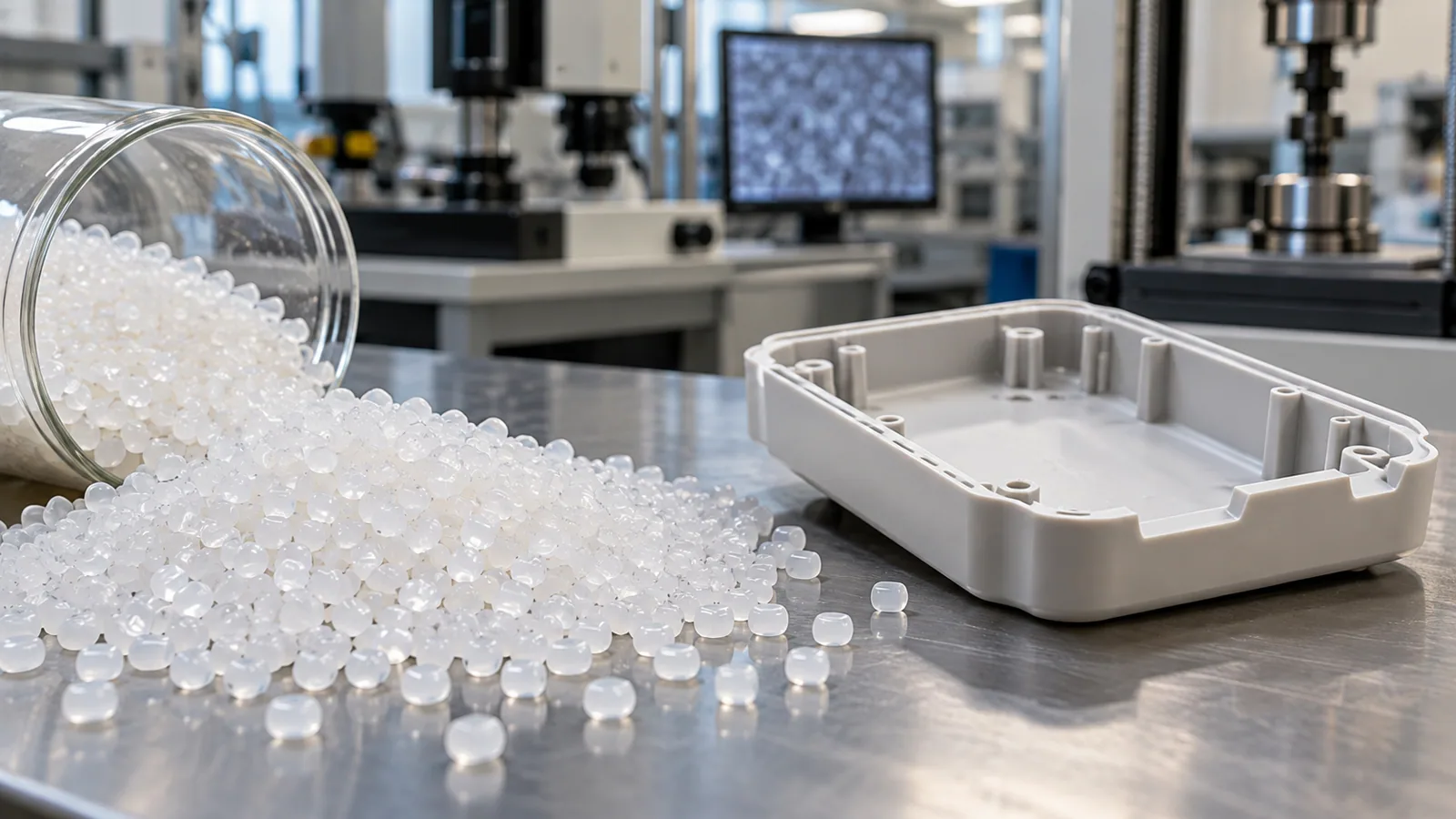
The association’s design guide explains that rotational molding places unusual demands on a polymer: particles must flow and sinter in a heated mold without the shear used by some other plastic processes. Polyethylene is the most common choice, but grades vary in stiffness and resistance to service conditions.
Ask for a material specification
A product sheet that says only “PE” leaves open questions about grade, additives and processing. These choices can affect impact behaviour, outdoor ageing and dimensional stability. The same appearance does not establish equivalent performance.
- Record the proposed resin grade and relevant data-sheet revision.
- Match UV, temperature and chemical requirements to actual use.
- Confirm performance on a molded sample, not only on raw-material data.
The resin photograph is illustrative. No recycled content, certification or case-specific rating is implied.
Source: Association of Rotational Molders — Common Plastic Materials