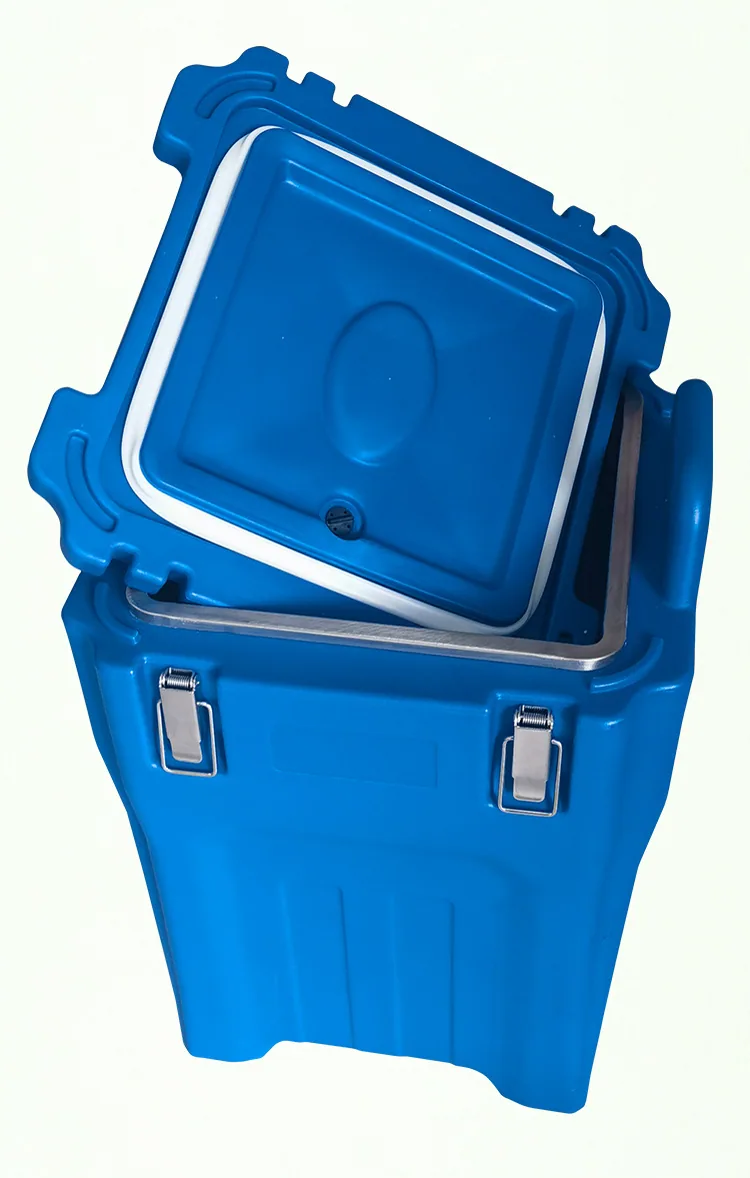
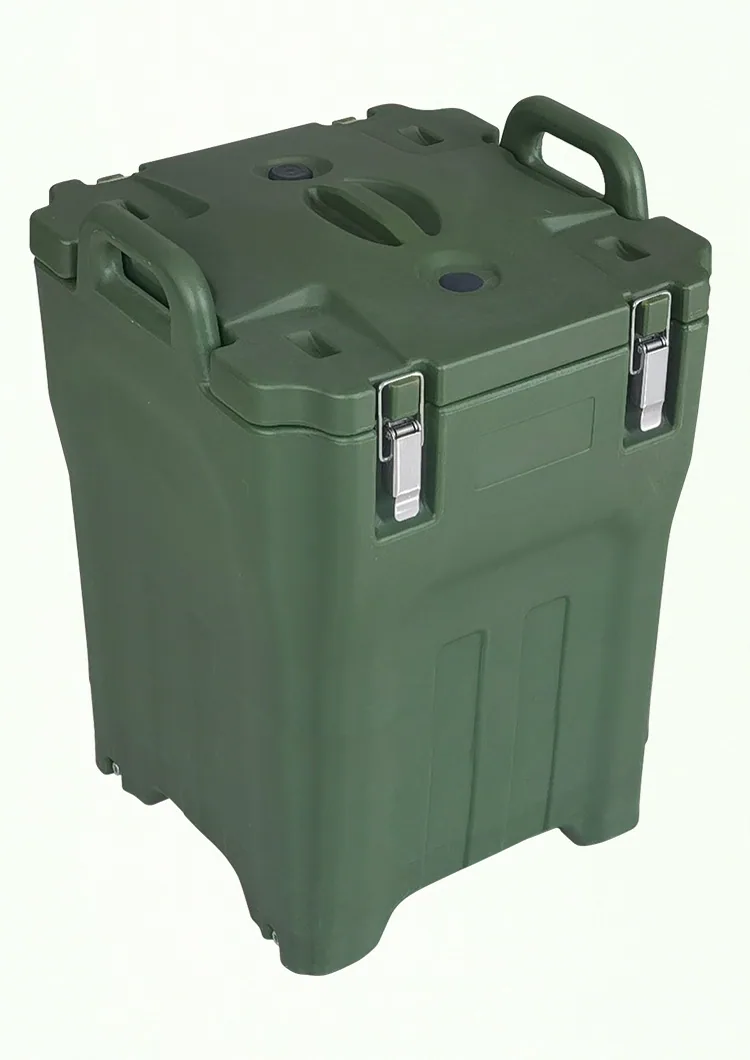
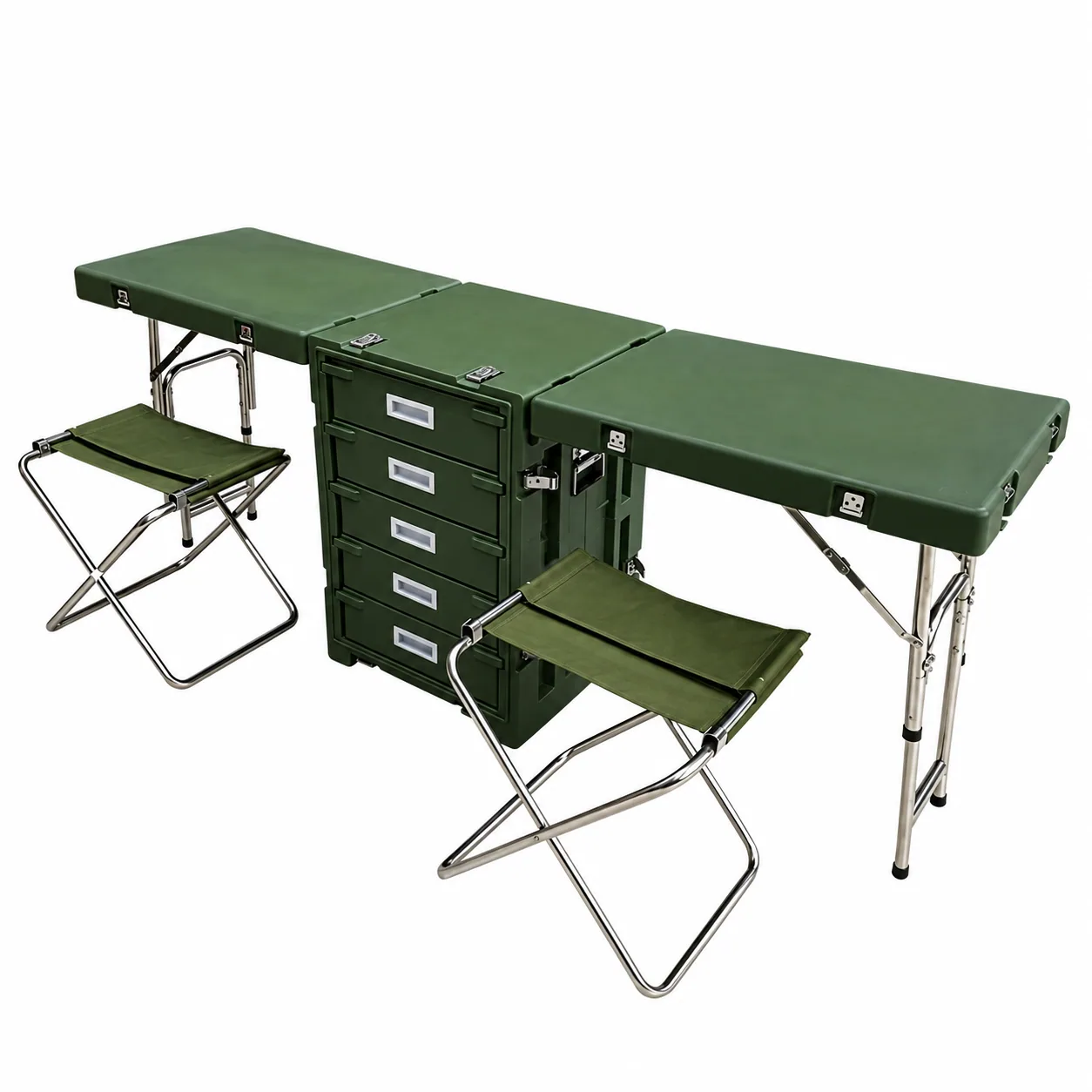
Ribs Can Improve Stiffness Without Excess Shell Weight
ARM describes how strategically placed ribs stiffen rotomolded parts. For transport cases, rib layout should follow handling and stacking loads.
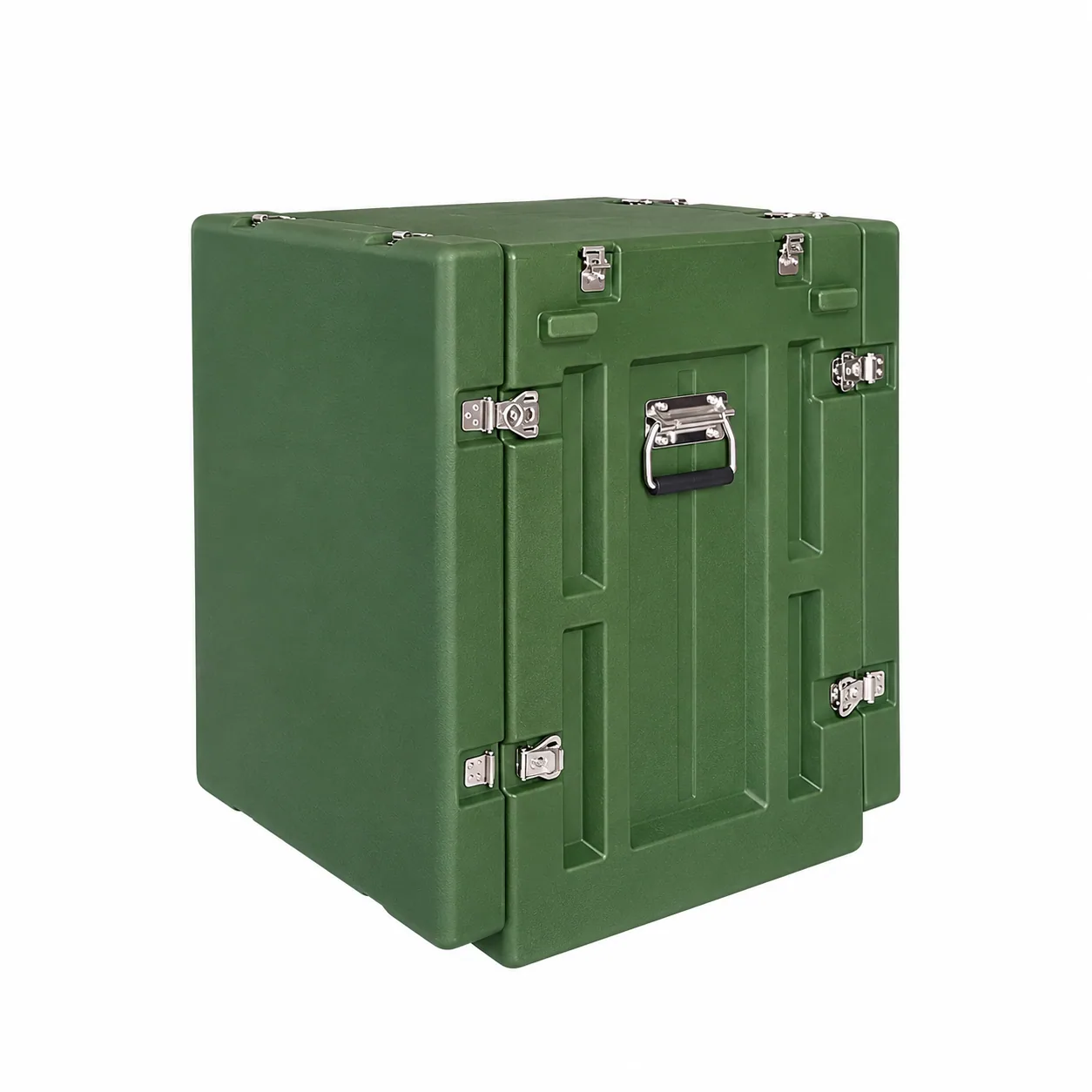
The association’s guide treats ribs as an important feature for relatively thin-walled rotomolded parts. It notes that several shallow ribs can be easier to mold than one deep rib. The purpose is to add stiffness efficiently while respecting the process’s geometry limits.
Put material where it helps
A ribbed shell may resist bending better than a featureless wall of the same average thickness, but only when the pattern supports the real loads. For a case, that may include the base, lid, wheels and handles. Ribs must also leave room for hardware and cleaning.
- Trace expected lift, stack and impact paths before laying out ribs.
- Avoid assuming every visible ridge adds useful strength.
- Validate the finished geometry with the intended packed mass.
The folded-workstation cover is an illustrative CASEROVA product image, not the item discussed by ARM.
Source: Association of Rotational Molders — Reinforcing Ribs