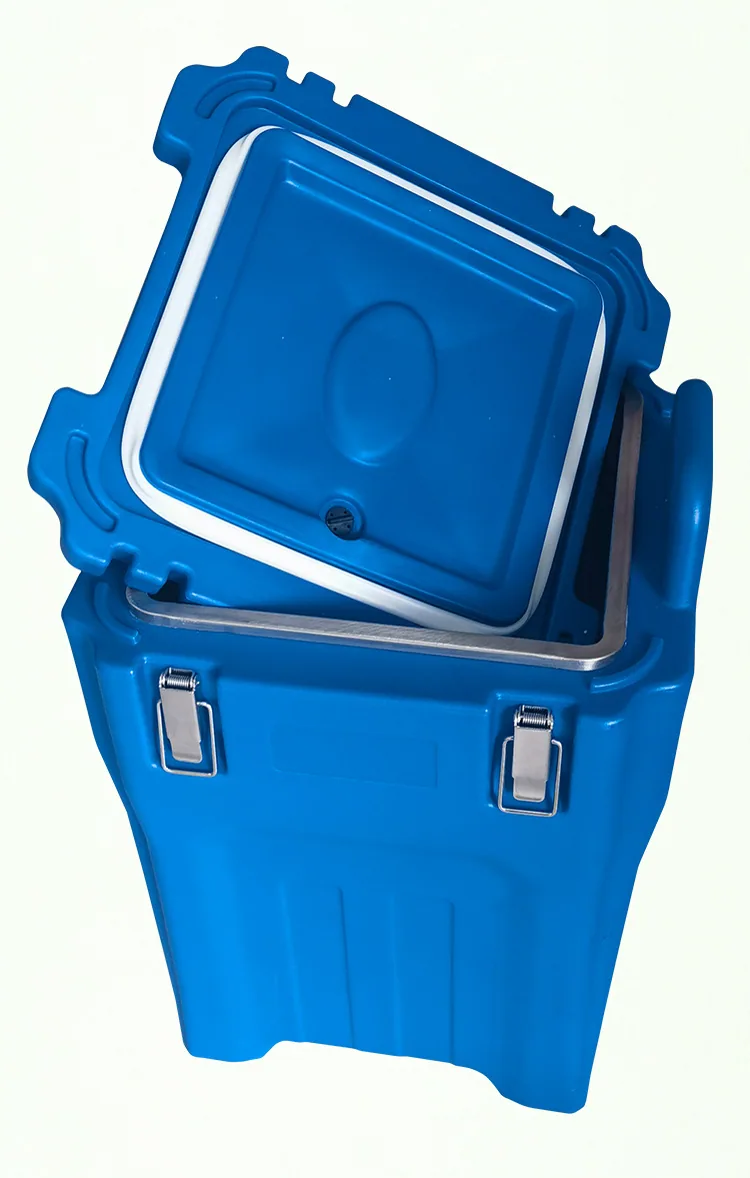
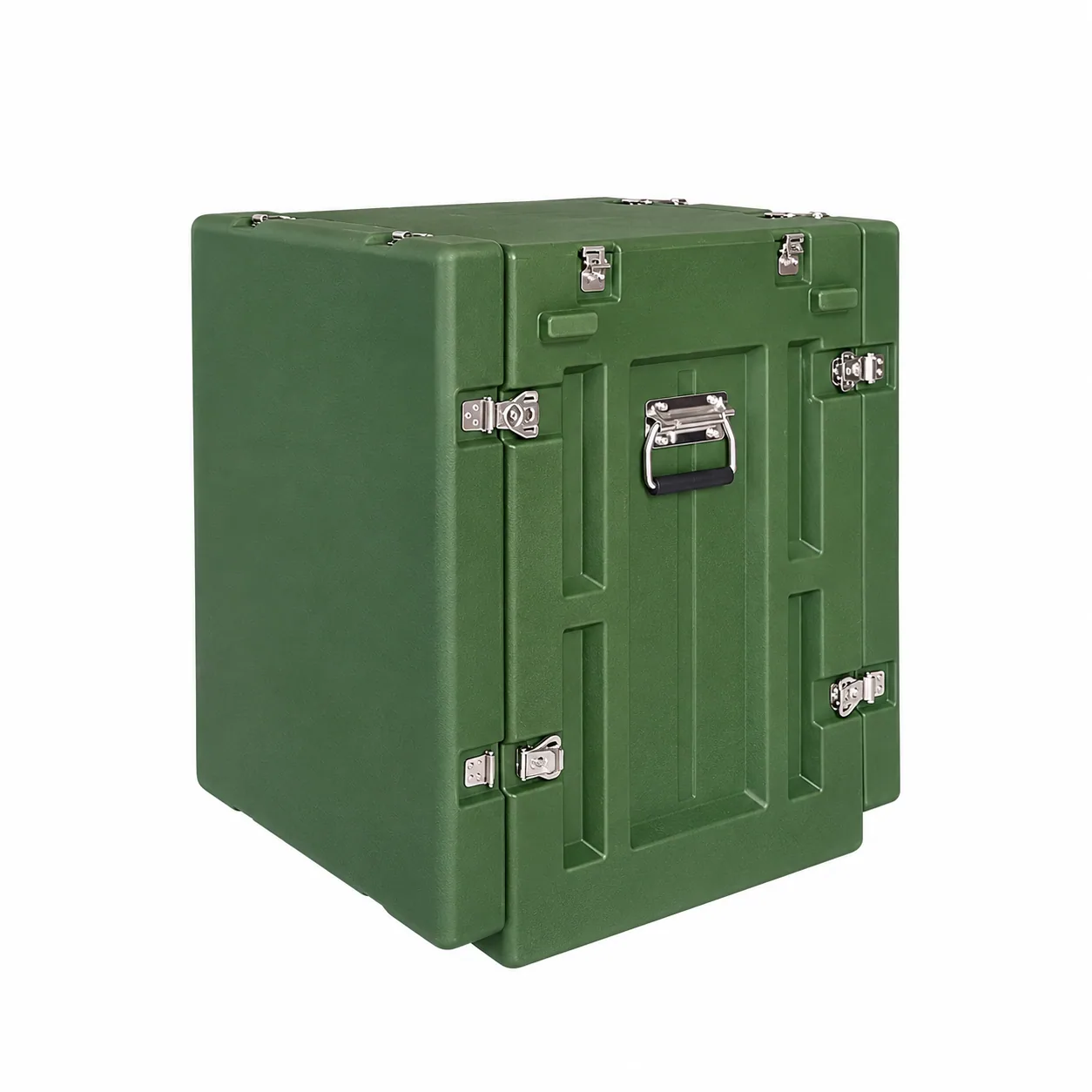
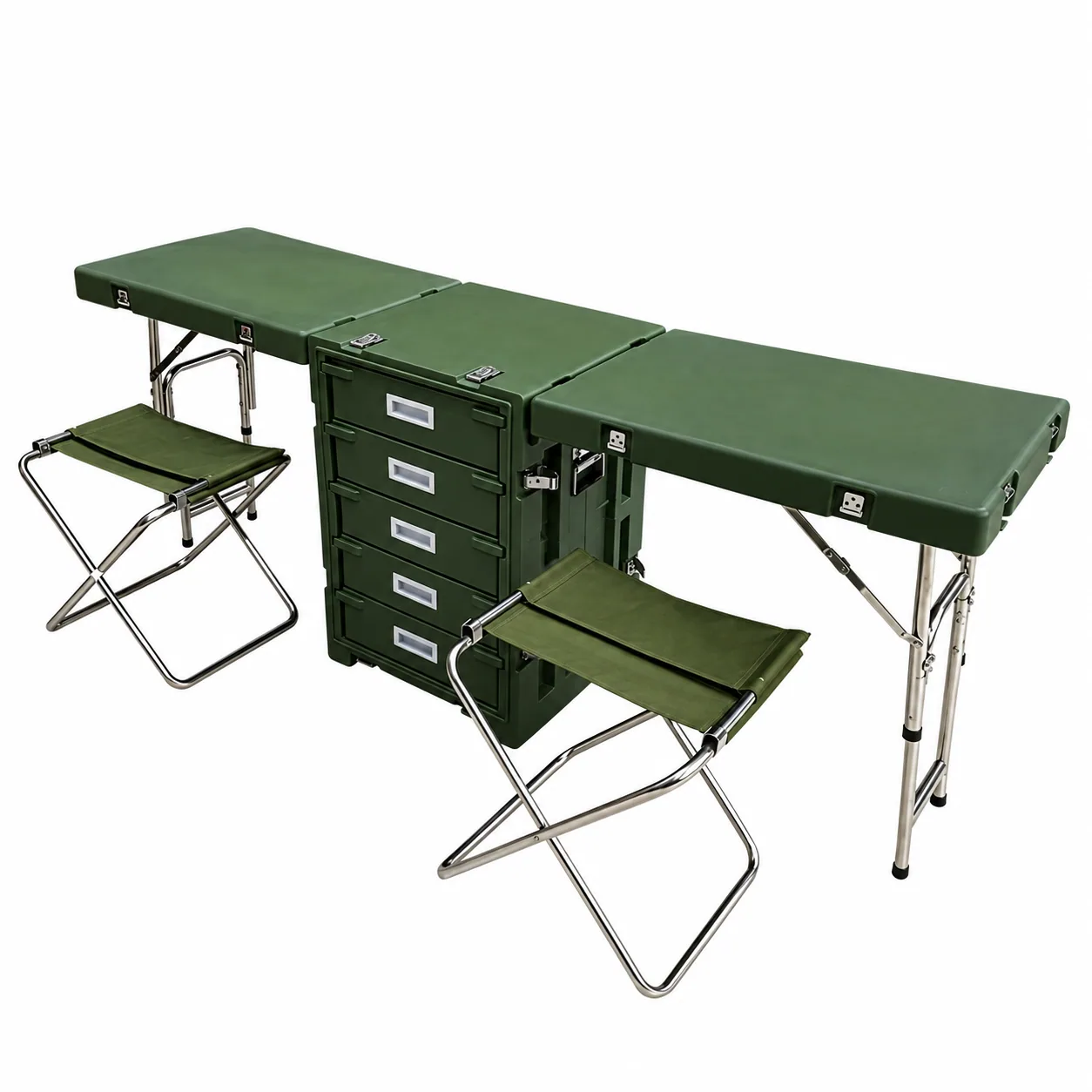
Rounded Corners Help Both Strength and Moldability
The ARM design guide explains why generous corner radii reduce stress concentration and help plastic fill a rotating mold.
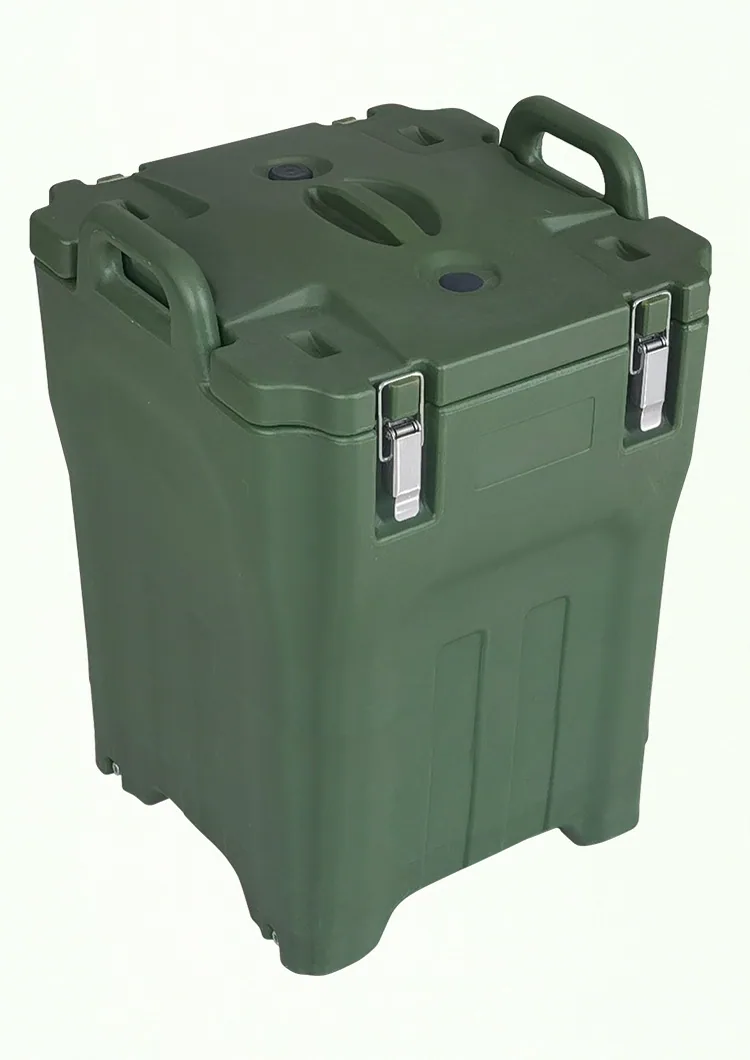
ARM explains that sharp inside corners can be difficult to fill consistently and may become locally thin. Larger radii distribute stresses over more material and improve moldability. The guide gives general proportions, but an appropriate radius still depends on the part geometry and material.
Check the inside corner too
Buyers often judge a case by the outer corner, yet the inner contour affects usable volume and the support available to inserts. Corner design also influences how a liner or foam fits. A drawing should show both inner and outer transitions where they matter.
- Review corners near handles, latches and feet for concentrated loads.
- Confirm clearance for the protected equipment and any liner.
- Inspect sample corners for thin spots or incomplete filling.
The cover shows a CASEROVA food-carrier shell as a general shape example; it does not establish a tested radius or strength rating.