What Rough-Handling Tests Mean for Large Transport Cases
ASTM D6179-20(2025) outlines drop, tip, tipover and rolling tests for large shipping cases and crates. Here is what the published scope suggests for practical case design.
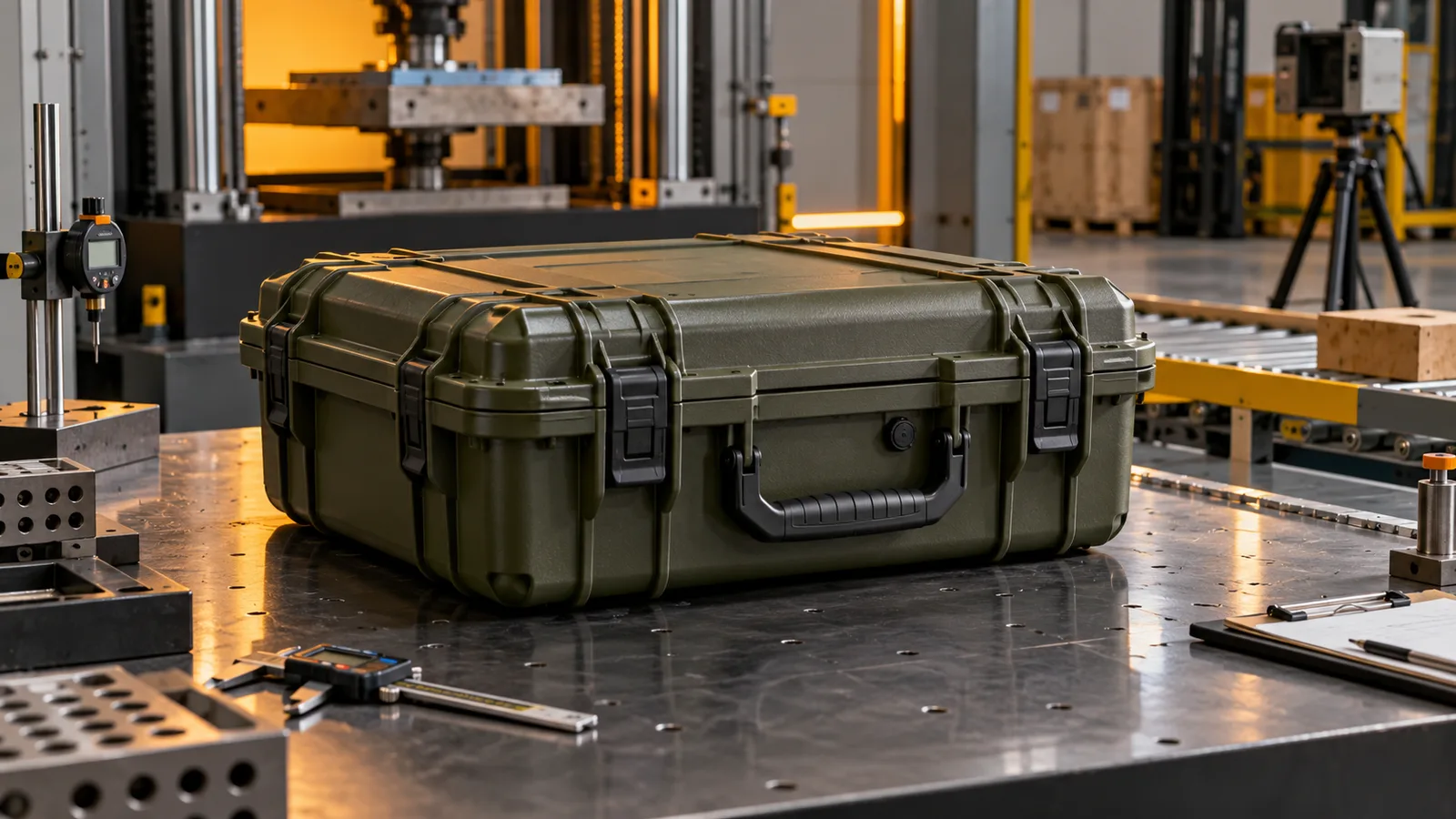
When equipment travels through warehouses, vehicles and loading docks, its outer case may be dropped, tipped or rolled. ASTM International lists D6179-20(2025) as the active edition of its test methods for rough handling of unitized loads and large shipping cases and crates. The published scope describes several ways to examine a filled case and its contents; it does not prescribe one universal test for every shipment.
Look beyond the shell
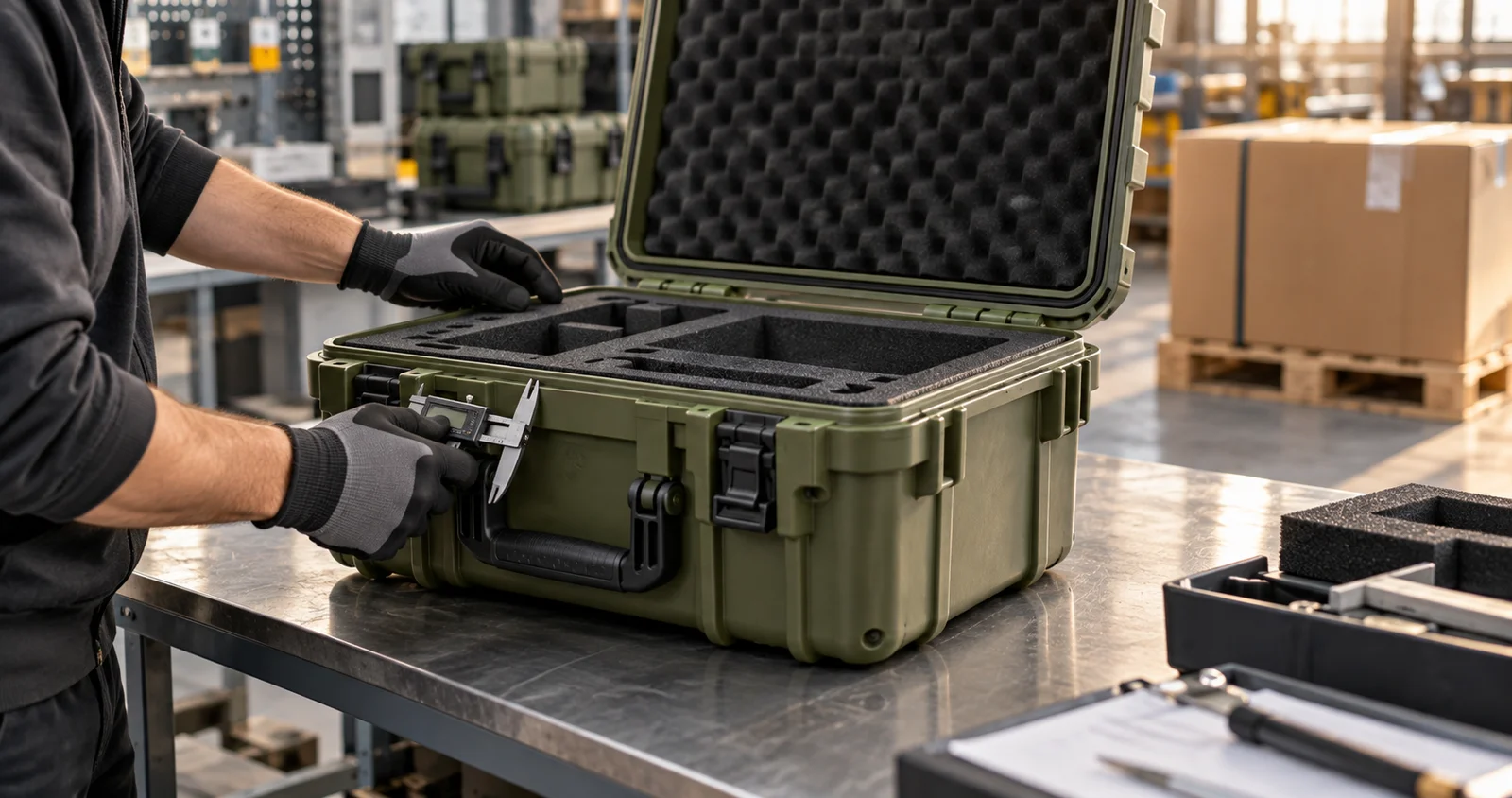
The ASTM scope identifies drop tests, a tip test for tall or top-heavy packages, a tipover test and a rolling test. For buyers, this is a reminder to evaluate the complete packed system: shell geometry, closures, handles, interior support and the actual equipment load. A case that survives empty may behave differently once a heavy instrument is installed.
Turn a test plan into a design brief
- Define the packed weight and centre of gravity before selecting handles or wheels.
- Specify how the equipment is held inside the case, including clearance and shock-sensitive points.
- Agree on handling scenarios and acceptance criteria before claiming a level of protection.
The standard also cautions that not every method applies to every container or load. This article is an interpretation of its publicly available scope, not a claim that any CASEROVA product has passed ASTM D6179. Project-specific testing and documented results should support any performance claim.