Recycled Resin Is Entering Protective Case Design
NANUK says the shell of its Eco-Friendly Line contains at least 95% post-consumer recycled resin. The example puts material selection and verification in focus for case buyers.
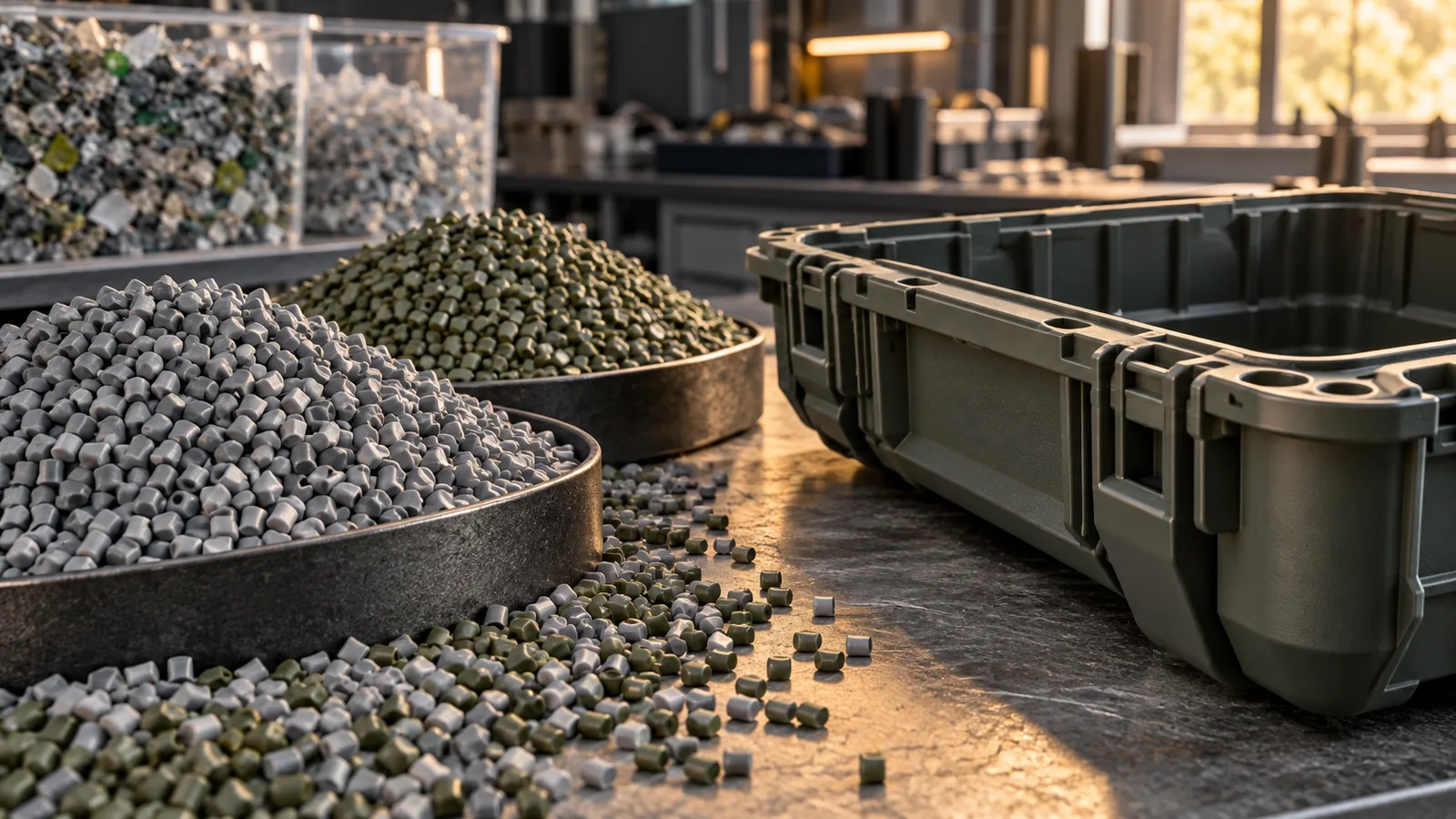
Protective cases are usually judged by what they keep out and how they survive repeated handling. Material origin is becoming part of the discussion too. On its Eco-Friendly Line page, NANUK says the shell of that collection is made from a minimum of 95% post-consumer recycled resin; it identifies recovered polypropylene from electronic waste as the feedstock. This is a statement about NANUK’s own line, not about CASEROVA products.
Recycled content is only one design variable
A recycled-content figure is useful, but buyers still need to understand which components it covers. NANUK specifies the shell rather than every latch, seal, wheel or insert. For a custom transport case, the material decision should be reviewed alongside the required impact behaviour, dimensional consistency, closure fit and service environment.
Questions worth asking on a custom project
- Which components use recycled resin, and what evidence supports the stated percentage?
- Will the specified material and wall design meet the project’s handling and temperature needs?
- How will color, repairability and end-of-life handling affect the full case system?
The wider lesson is to connect sustainability claims to a defined component and a tested specification. CASEROVA material options are assessed case by case; no recycled-content or certification claim is made here for our current catalog.
Source: NANUK — Eco-Friendly Line